


Our Solutions for Paper & Ink
Factories that produce paper and ink are complex industrial environments, designed to transform raw materials into finished products through highly controlled chemical and mechanical processes.
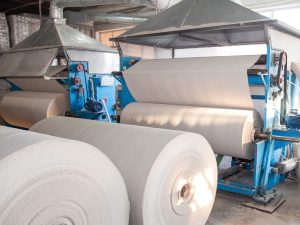
Paper production begins with cellulose, obtained from plant fibers or recycled sources, which is mixed with water and additives to create a homogeneous pulp. This pulp is spread onto rollers and pressed to remove moisture, then passes through heated cylinders that complete the drying process. Finally, the paper is finished with surface treatments to improve its characteristics.
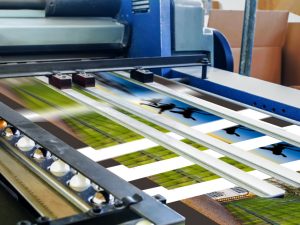
Ink production, on the other hand, is based on dispersing pigments in a liquid vehicle composed of oils, resins, and solvents. The pigments are mixed in mills or kneaders, and the product undergoes filtration and stabilization processes to ensure the right viscosity and consistent quality.
These processes require very precise thermal control. In the paper drying departments, the cylinders must reach high temperatures, often exceeding 100 °C, to quickly evaporate water. In ink production, some resins and oils also need to be heated to maintain fluidity and facilitate mixing. Cooling is equally important: after drying, the paper must be gradually cooled to prevent deformation, while in ink plants it is necessary to dissipate the heat generated by the mills to preserve the chemical properties of the pigments. To ensure safety and quality at every stage, these factories therefore require dedicated cooling and ventilation systems capable of accurately controlling temperature and humidity throughout the various phases of production.
 |
 |